A day with Dr. Karen Glinert Carlson – 7C/8A
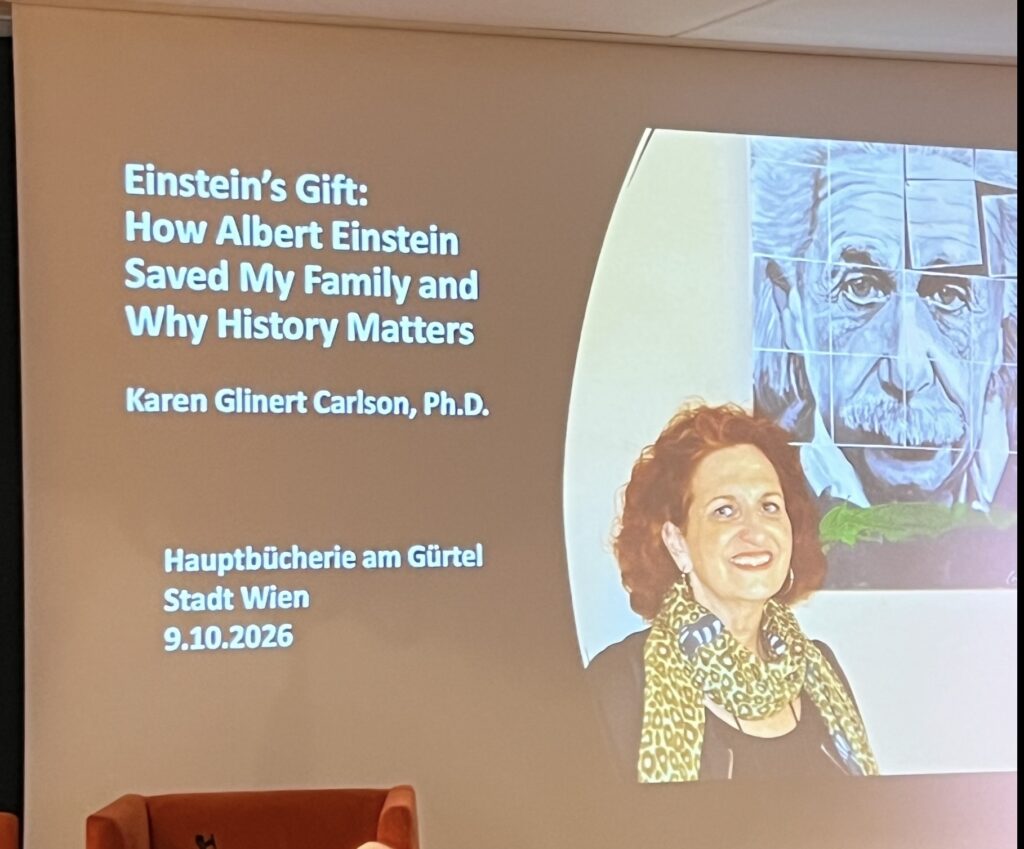
Dr. Karen Glinert Carlson – The Importance of Remembering History and how Albert Einstein Saved her Family
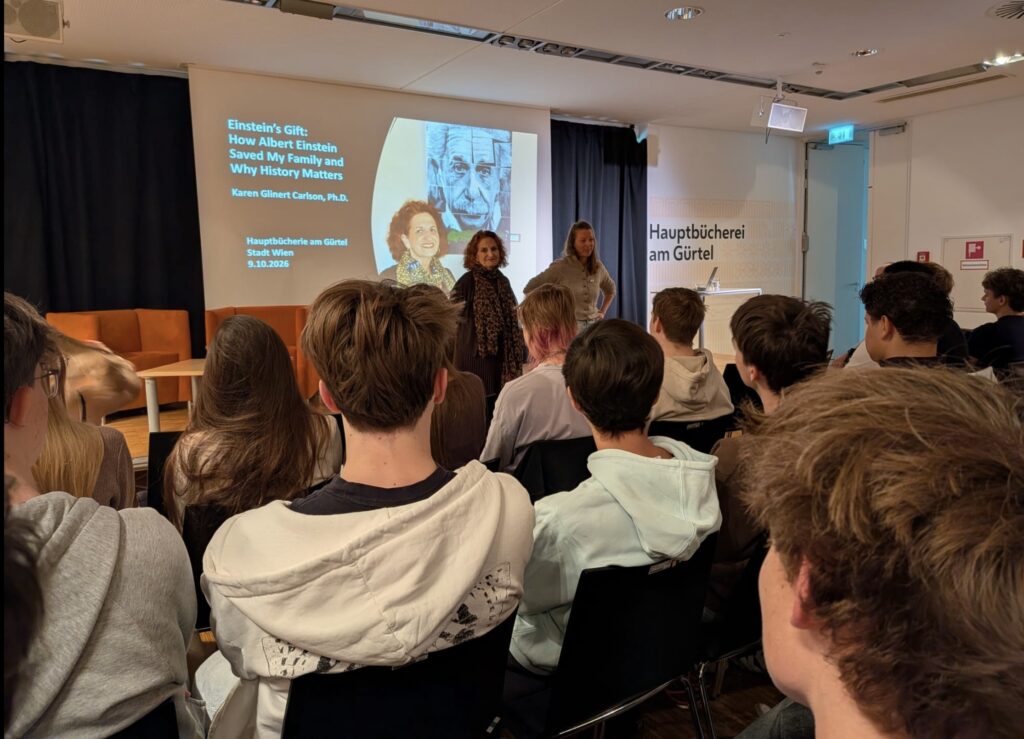
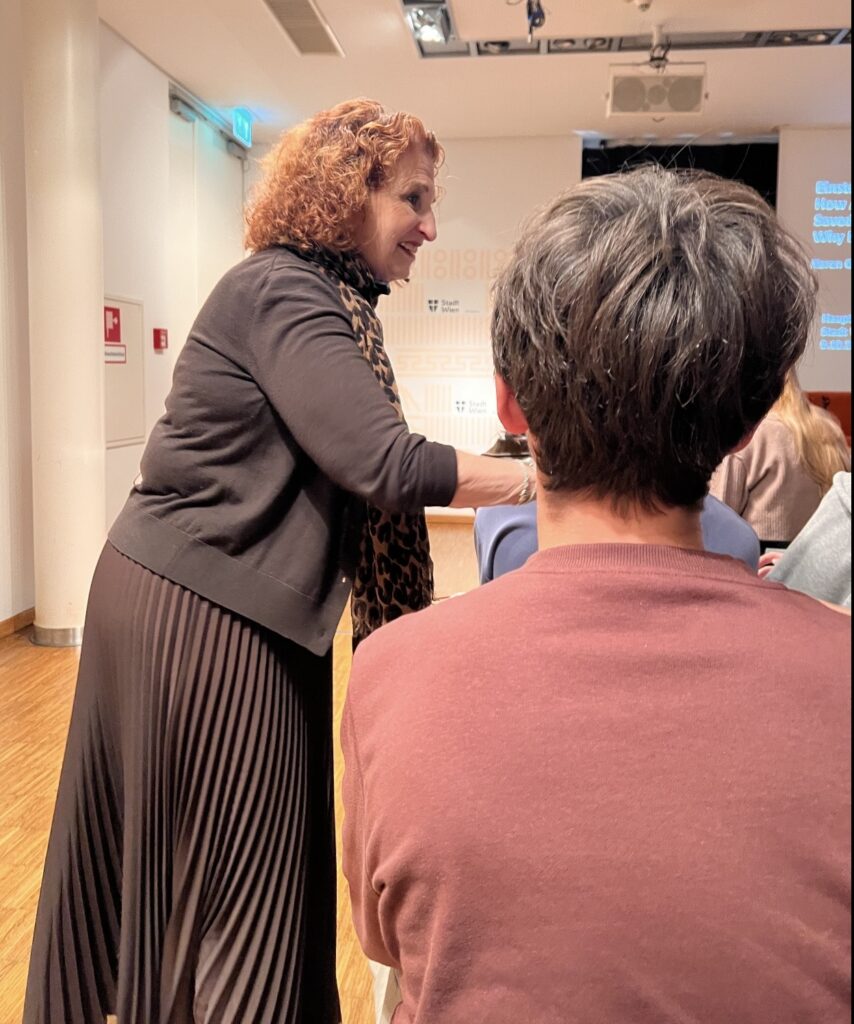
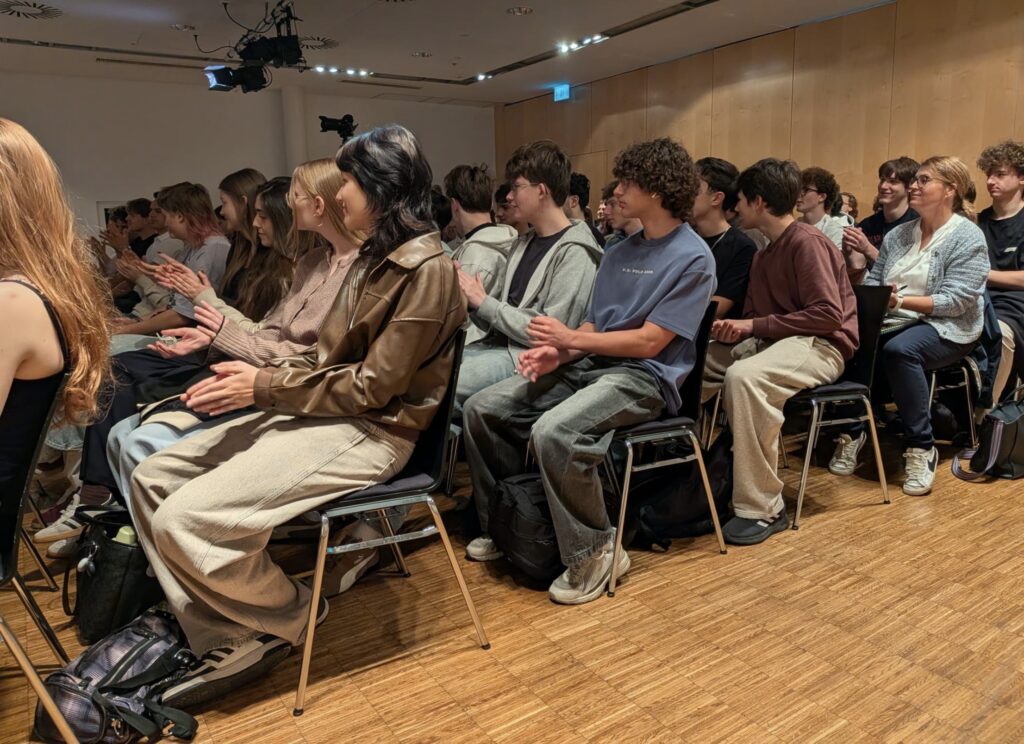
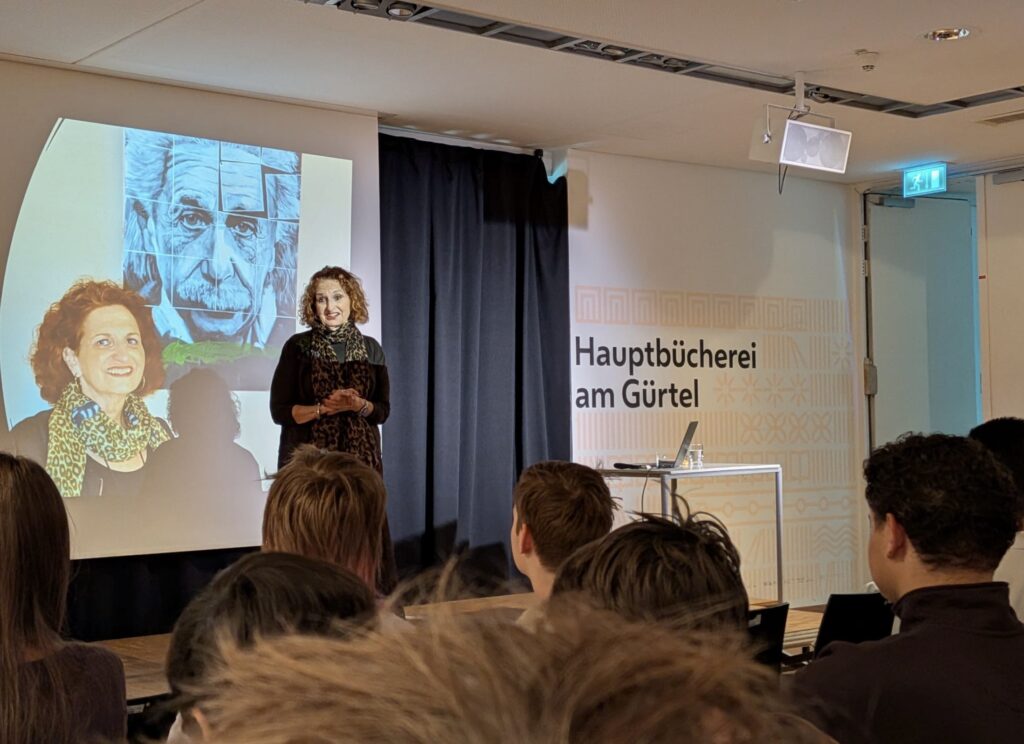
In October two classes (7c and 8a) attended a moving speech by Dr. Karen Glinert Carlson in which she shared the remarkable story of her family. As both a child and grandchild of Holocaust survivors, her family history is closely connected to one of the darkest periods of European history. Her speech demonstrated why remembering the past remains essential, especially for younger generations.
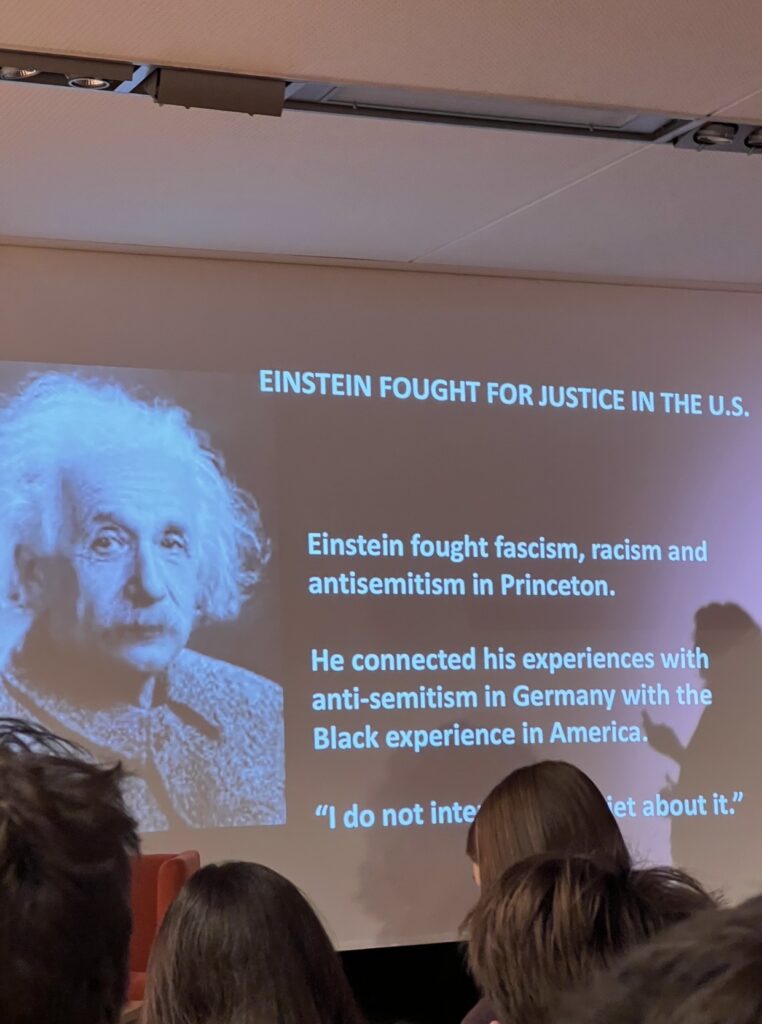
During the Holocaust members of Carlson’s family faced persecution and were forced to fight for their survival. An extraordinary part of her family’s story is their relation to Albert Einstein – Dr. Karen Glinert Carlson is his grandniece. Einstein helped her family at a time when Jewish people were being persecuted by the Nazi regime. His support became an important part of their journey and showed how individual acts of courage and humanity can make a significant difference in the lives of others.
In her speech, Dr. Carlson did not only focus on the suffering experienced by her family. She also spoke about the responsibility of younger generations to learn about history and keep the memories of Holocaust victims and survivors alive. As fewer survivors are able to tell their stories personally, education becomes increasingly important. Schools, teachers and students therefore play a crucial role in ensuring that these experiences are neither forgotten nor ignored.
One of the most powerful messages of her speech was directed towards the students in the audience. Dr. Carlson reminded them that they are the future. The decisions young people make and the values they choose to defend will influence the society of tomorrow. Studying history is therefore not simply about memorising dates, names and events. It is about understanding the consequences of hatred, discrimination and intolerance and recognising the importance of standing up for human dignity.
Her family’s story also demonstrates that history is not something distant or abstract. Behind historical events are real people, families and personal experiences that continue to influence later generations. Listening to stories such as Dr. Carlson’s allows students to develop a deeper and more personal understanding of the past.
Ultimately, Dr. Karen Glinert Carlson’s speech was both a testimony to her family’s experiences and a message of responsibility to young people. By remembering the past and learning from it, future generations can contribute to creating a society based on respect, tolerance and humanity. Her words remind us that although we cannot change history, we can decide what lessons we take from it and how those lessons shape our future.